


René Boivin, Heritage and Creation
Photographs, unless otherwise stated: Anne Wohlgemuth, INU Studio.
It was at TEFAF Maastricht, last spring, that the Maison Boivin presented for the first time, side by side, its Heritage Collection, comprising close to sixty pieces, and its Contemporary Collection, itself made up of classic editions and new creations. These jewels are now on display in the salon and boutique of the Village Royal, 25 rue Royale in Paris. Each of these sets has its own identity. Setting them side by side illuminates the trajectory of the Maison Boivin from its origins to the present day. It also underscores what is at stake in its renaissance, the reviving of a language shaped in succession by several women designers over the course of a century. The older history can be read in the works and the archives, while contemporary creation, for its part, is measured by the freedom the house still knows how to take with its own past.


This bracelet was acquired by Princess May de Faucigny-Lucinge, née May Ephrussi (1880–1964). A discerning collector, she assembled throughout her life a remarkable set of fashion accessories and haute couture pieces. She bequeathed part of her collections, notably several creations by the celebrated milliner Caroline Reboux, to the Union française des arts du costume, whose holdings are today kept at the Musée des Arts Décoratifs in Paris. Her niece by marriage, Princess Baba de Faucigny-Lucinge, was for her part one of the emblematic figures and one of the muses of the Maison René Boivin. Aguttes, June 2026.
 The historic pieces span more than a century of creation, since the founding of the house in 1890. Reprising iconic models, the Classics are the pieces re-editioned in keeping with the original savoir-faire. The first of them, the Quatre Corps ring, was perfected in 2023, though the piece was not officially presented until 2025.

From 1919 onwards, several women designers succeeded one another as designers of the house, with periods of transition and sometimes of overlap. Such artistic continuity explains why a jewel from the 1930s and a contemporary piece can be animated by the same spirit, without copying one another.

Thomas Torroni-Levene, managing director of the Maison René Boivin, has agreed to shed light on what defines the house today and what endures within it.


René Boivin joaillier Est. 1890


The Maison Boivin was founded in 1890 by Jules-René Boivin. This goldsmith and chaser had trained in the workshop of his elder brother Victor and was recognised in his lifetime for the quality of his brush as much as of his chisel. The house first grew by producing jewellery and objects of goldsmithery for the great addresses of the Place Vendôme, Boucheron and Mellerio in particular.


In 1893, René Boivin settled on rue de Turbigo and married Jeanne Poiret (1871–1959). She was the sister of Paul Poiret (1879–1944) and the sister-in-law of the decorator André Groult (1884–1966). This family alliance brought the house lastingly close to the most innovative circles of Parisian decorative arts.


L’Art nouveau domine incontestablement cette époque : Boivin choisit le contrepied, et ses premières créations connues osent un éclectisme puisant aussi bien dans les répertoires celtiques que mérovingiens, mésopotamiens ou égyptiens. Eclectisme des matières aussi : l’or et l’argent, l’ébène, l’ivoire et le lapis-lazuli côtoient les gemmes. Cette liberté formelle constitue l’un des fils conducteurs de l’histoire de la maison Boivin.
Art Nouveau unquestionably dominated this period. Boivin took the opposite course, and its earliest known creations dared an eclecticism drawing on Celtic as much as Merovingian, Mesopotamian or Egyptian repertoires. An eclecticism of materials too, since gold and silver, ebony, ivory and lapis lazuli sit alongside the gems. This formal freedom is one of the guiding threads of the Maison Boivin’s history.
Poiret and Boivin shared the same audacity. When Paul Poiret freed the silhouette from the corset and imposed the Directoire line, full colour and a dreamed-of Orient, René Boivin brought to jewellery a freedom of volume and a learned eclecticism entirely comparable. The albums Les Robes de Paul Poiret racontées par Paul Iribe (1908) and Les Choses de Paul Poiret vues par Georges Lepape (1911), together with the party of the Thousand and Second Night (24 June 1911), fixed this oriental imaginary and this coloured modernity to which certain Boivin creations may be related.

René Boivin died in 1917. Pierre, their only son, met his death the following year in an aeroplane accident and was officially recognised as having died for France (Mort pour la France). After this double bereavement, Jeanne took over the running of the house and kept it without interruption until her retirement in 1954, assisted by her two daughters, Germaine and Suzanne. The salon at 4 avenue de l’Opéra, decorated by André Groult, became the nerve centre of the house, and also a place of sociability, and would remain so until its closure in 1991.


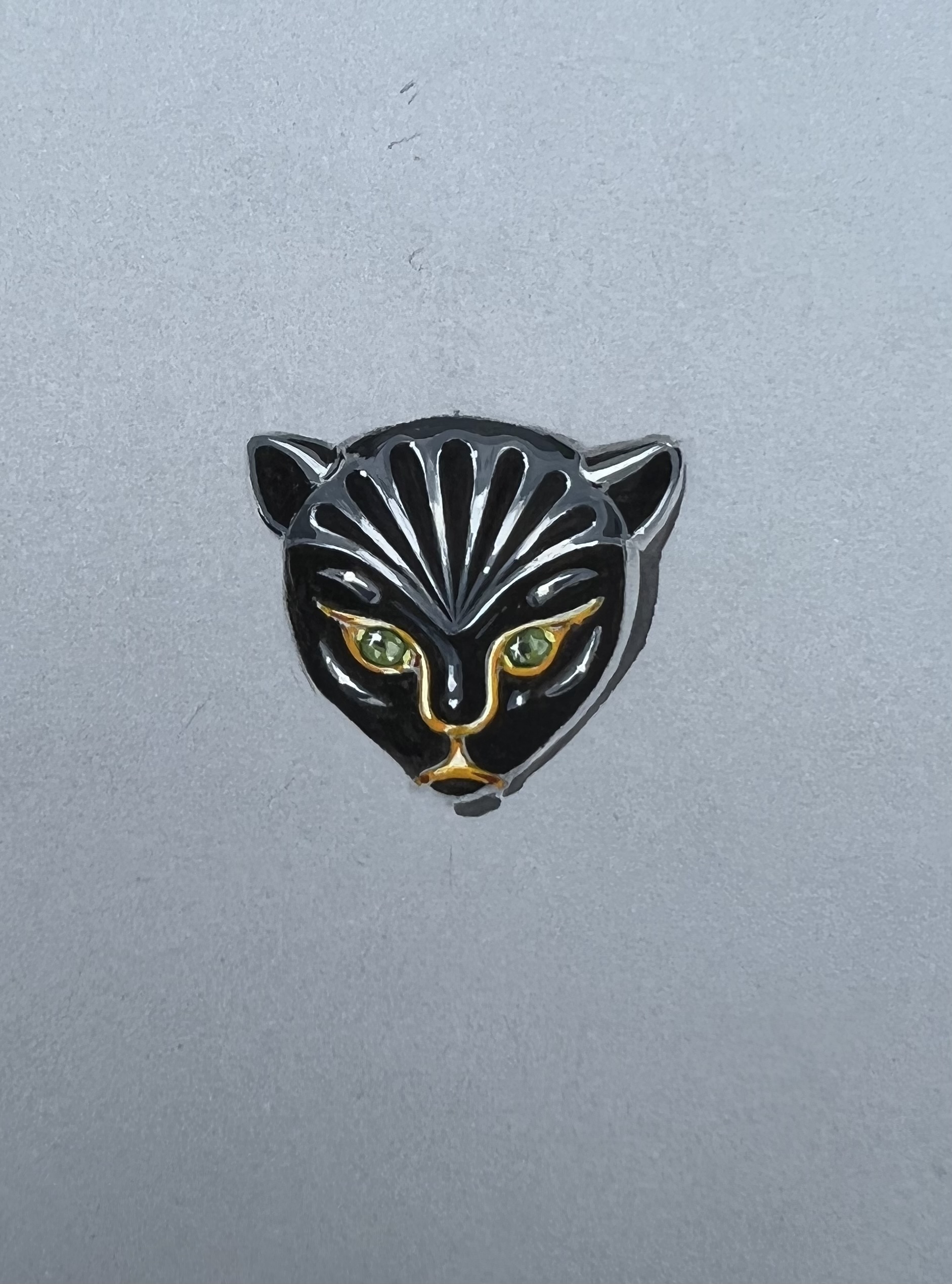
Jeanne Boivin was not a designer, which did not prevent her from playing a decisive role in the house’s aesthetic direction. As early as 1919 she entrusted the design to a young graduate of the Besançon School of Fine Arts, Suzanne Vuillerme (1900–1983), and a few years later she appointed her artistic director of the house. It is under her married name, Suzanne Belperron, that she would inscribe her work in the history of jewellery. Belperron worked at Boivin until February 1932, before joining the dealer Bernard Herz. According to the designer’s expert, Monsieur Olivier Baroin, Suzanne Belperron can be recognised in particular by her habit of drawing on grey card, with a characteristic cast shadow at the lower right of each subject.


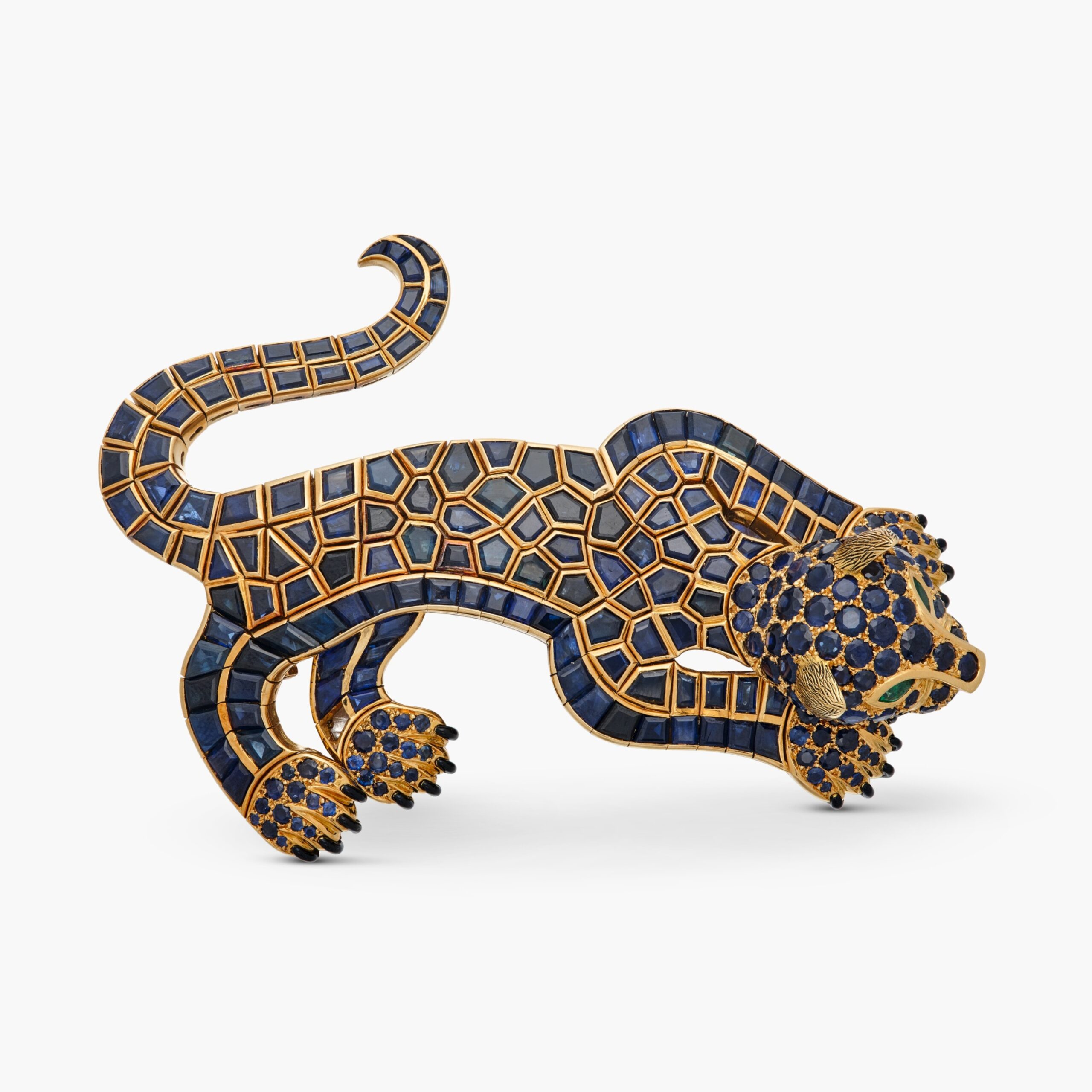
Juliette Moutard (1900–1990) took over in January 1933. Mademoiselle Moutard steered the house towards naturalistic themes (the animal and plant worlds), but also towards the so-called Hindu compositions and towards passementerie, which the house still perpetuates. According to Thomas Torroni-Levene, her line can be recognised by the fine tracing paper, the supple forms, the soft stems and the slightly curved tips. She remained at Boivin for nearly forty years, until 1970.


Juliette Moutard also took up, with elegance and humour, the house’s bestiary.

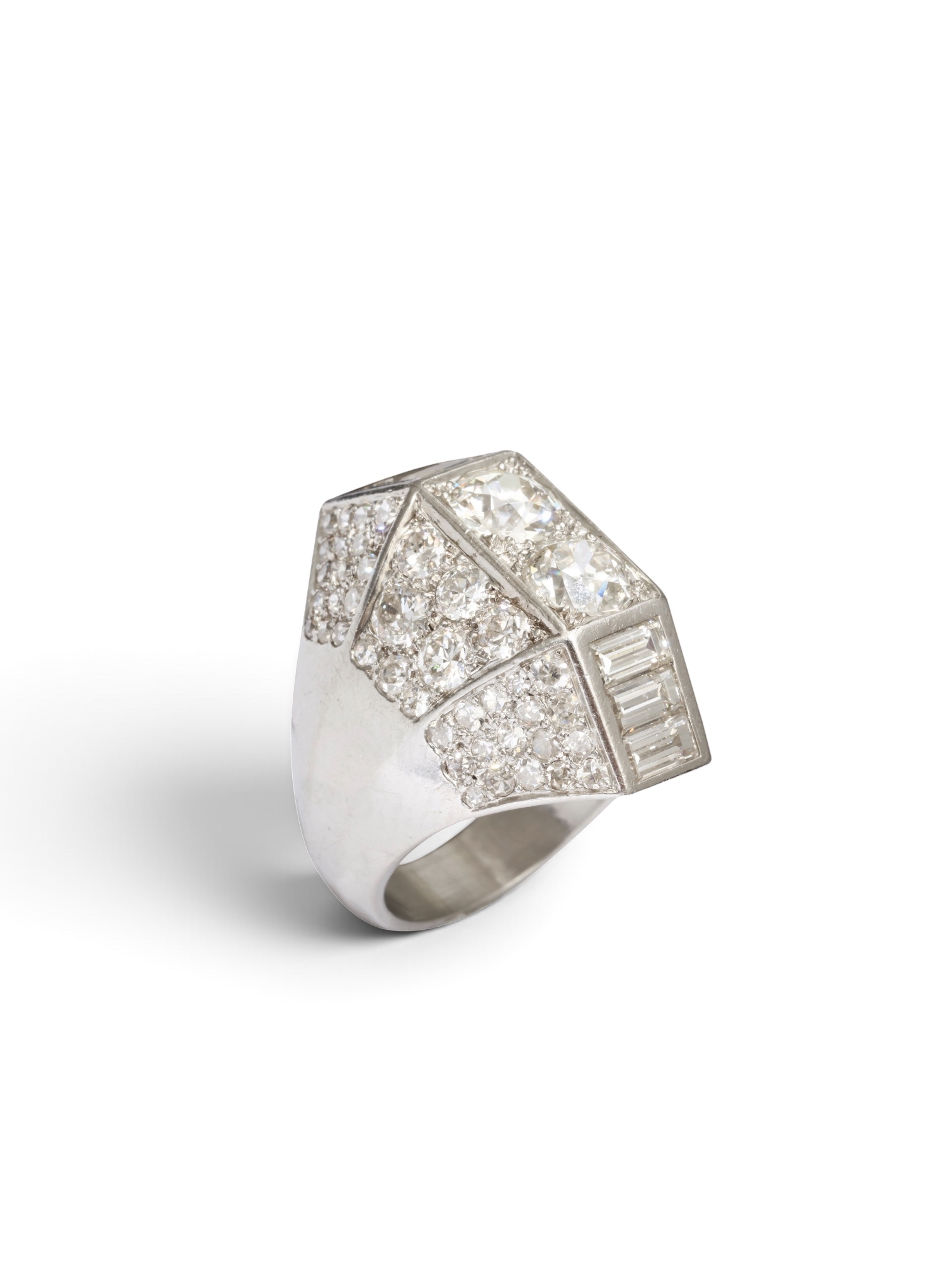
Marie-Caroline de Brosses succeeded her in the winter of 1970. Originally intending to become an architect and a graduate of the Union Centrale des Arts Décoratifs, she arrived with no experience of jewellery, which, she said, allowed her not to “repeat”. Her jewels, more pared-down than Juliette Moutard’s, are “gadrooned and fleshy”, very often with a touch of humour. She drew on thick tracing paper and introduced, with the Galtier workshop, the sliding bracelets, in which a ring slides to reveal or conceal a pavé of stones.




Among her clients were the Begum Aga Khan, Farah Pahlavi (née Diba, in 1938), Madame Pompidou (1912–2007) and Jean d’Ormesson (1925–2017), for whom she made the academician’s sword in 1974.

 Some dozen years of expatriation in Asia physically distanced Marie-Caroline de Brosses from the workshop without interrupting her collaboration, since around fifty drawings a year continued to arrive and to supply the workshops. Her testimony was gathered in a long interview published on this site in May 2017, then in a lecture at the École des Arts Joailliers in January 2018. It constitutes a first-hand source on the 1970–1991 period, hitherto little represented in the literature devoted to the house. Like any retrospective account, it takes on its full value when set against the drawings, the stock books and the surviving pieces.
During these years of absence, continuity in design was ensured by Marie-Christine de Lamaze, who joined Boivin in August 1974. Marie-Christine de Lamaze remained seven years with the house, until August 1981. As her drawings remained the property of Boivin, only the tracings she had kept could today have borne witness to her work, and sadly these were destroyed in a fire at her home. Among her most remarkable achievements is the design of the academician’s sword of Maurice Rheims (1910–2003), auctioneer, art historian and writer, elected to the Académie française in 1976. Marie-Christine de Lamaze conceived and drew this sword for the Maison René Boivin, but its execution was entrusted, in 1977, to the workshops of Arthus Bertrand.

Marie-Christine de Lamaze had the good fortune, in her own words, to spend several years alongside Paul Poiret’s two nieces (Suzanne and Germaine, daughters of the Boivin couple) and Monsieur Girard. “Mademoiselle” Juliette also came to visit them from time to time. The designer entrusted to us a few rare records of her creations.


Ghislaine d’Entremont succeeded Marie-Christine de Lamaze in 1981.


Sylvie Vilein joined René Boivin as a designer on 7 February 1988 and worked there until August 1999. She is the last designer of the Maison René Boivin. After the house was taken over by Nathalie Hocq-Choay, she continued her work for Boivin from September 1999 to September 2001. Owner of Poiray since 1985 and a former vice-president of Cartier, Nathalie Hocq-Choay remained at the head of René Boivin until 2019.
The house owes to Sylvie Vilein in particular the sliding watches and the articulated octopus.


From Belperron to Vilein, the women designers did not individually sign their pieces, in keeping with the tradition of not placing the women designers themselves in the foreground. When a signature was applied, it was that of the house, “René Boivin”. Since the house worked only with artisans and only in France, the jewels bear the regulatory marks, notably the maker’s mark and the assay mark, which identify the workshop and the fineness of the metal.

The house then changed hands several times before being taken over, in 2019, by Virginie Torroni, descended from a dynasty of jewellers spanning five generations. Her son, Thomas Torroni-Levene, then took over the chairmanship of the Comité Boivin, which is “tasked with cataloguing, authenticating and championing this heritage”. (The detail of the dates, the succession of designers and the changes of ownership appears in the appendix.)
The Boivin Grammar

At René Boivin, the jewel is conceived first of all in terms of volume and articulation. A starfish brooch in rubies and amethysts, which tradition holds belonged to Claudette Colbert (1903–1996), is its most frequently cited emblem. Born in France and later naturalised American, Claudette Colbert received in 1935 the Academy Award for Best Actress for It Happened One Night (released in France as New York-Miami). She was one of the great figures of Hollywood cinema of the 1930s and 1940s. The brooch, with its articulated arms, its organic volumes and its polychromy, belongs as much to sculpture as to jewellery.

From its earliest days, Boivin has combined precious materials with unexpected ones. Wood, ebony, ivory and hardstones sit alongside diamonds and coloured stones, gold and silver.

The Corde bracelet, created in the mid-1920s, twisted from silver wire and set with gold beads at each end, illustrates this aesthetic of material worked for its own sake. Present in the collections from the 1930s onwards and carried through to the 1970s, it appealed to a mixed clientele. Its origin remains debated. Thomas Torroni-Levene relates the motif to the adornments of the Akha people of Southeast Asia, while the house’s archives also preserve documents that may suggest Celtic motifs. These connections remain working hypotheses. In the absence of a source establishing a direct lineage, it is more accurate to see in them resonances rather than proven influences. Boivin thus draws on several ornamental traditions without it always being possible to specify their origin.

Throughout the twentieth century, we can distinguish two moments that answer one another without merging. That of René Boivin, nourished by archaeology and travel, then that of Jeanne Boivin and the house’s women designers, who extended this eclecticism by other means. Over the decades the Boivin style has remained steeped in curiosity and singularity. For Thomas Torroni-Levene, this permanence can be read in a few constants, the iconographic themes, the volumes and proportions, the chromatic palette founded on a recurring selection of gems (peridots, amethysts, citrines, aquamarines), and, finally, the taste for transformable jewels.


From the hushed salon to the great auction houses


Running counter to the traditional channels of high jewellery, the house’s economy long rested on private commissions and the salon rather than on the shop window and advertising. Its clientele mingled the European aristocracy, crowned heads and American collectors, and the Parisian artistic circles held a large place within it. Among the regulars were Raoul Dufy (1877–1953), Marie Laurencin (1883–1956), Jean Cocteau (1889–1963), author of Les Enfants terribles (1929), and Cecil Beaton (1904–1980), whose Book of Beauty (1930) fixed the society portrait of those years.
This discretion did not prevent the market from consecrating the house. At the A Legacy of Elegance sale at Sotheby’s New York on 8 December 2025, a 1930s brooch in rock crystal, diamonds and pearls, created by Belperron for Boivin, sold for 53,340 dollars, while the Grenade brooch, set with a cushion-cut sapphire surrounded by diamonds and mounted in a modernist gold setting drawn in June 1937 by Juliette Moutard, reached 279,400 dollars, more than four and a half times its high estimate.


These results surprised the experts themselves. The anonymity of designers is not peculiar to Boivin, since it also characterises Cartier, Van Cleef & Arpels, Mellerio and Chaumet.
What sets Boivin apart lies elsewhere, in the coherence of a style recognisable independently of any signature. Its interpretations of the bestiary and its openwork oval settings on round stones bear particular witness to this.


At the 2025 Met Gala, Kim Kardashian wore an important 1960s Boivin necklace with floral motifs, composed around five cushion-cut diamonds. Presented by FD Gallery in New York, this jewel gave the house spectacular international visibility, in contrast to the discretion that had long been its own.

This heightened market recognition makes the question of attributions all the more decisive.
Since 2019, Thomas Torroni-Levene has been methodically inventorying the house’s holdings. These comprise sixty-two trunks bringing together more than twenty-five thousand drawings and studies, plaster models and maquettes, account books, stock inventories, order books and thousands of letters going back to the first years of the twentieth century. Their cataloguing required three full years of work. A gemmologist trained at the GIA in New York, Thomas Torroni-Levene also trained in the field, in the workshops of Paris, Bangkok and Geneva.


The principal difficulty of identification lies, for him as for the market, in the absence of signatures on the older pieces and of dates on the drawings. To the stylistic criteria that allow the “hand” to be distinguished, notably the line particular to each designer, the choice of support or Belperron’s characteristic cast shadow, are added the stock books, which recorded the cost of the stones, the weight in gold, the workshop hours, the cost of production and a sketch of the jewel.

The state of knowledge has evolved considerably. The research undertaken since 2019 has made it possible to restore to Suzanne Belperron a substantial body of drawings held in the René Boivin holdings. The attribution rests on stylistic resemblance and on technical criteria such as the support, the handling of the line, the cast shadow, the chronology of entry in the stock books and, where they survive, the manufacturing records.

While the market has in the past seen approximate attributions (Marie-Caroline de Brosses noted in particular that her creations were often mis-dated), the cataloguing of the archives now makes it possible to re-examine many of them. Nonetheless, the absence of signatures, later transformations, copies and documentary gaps make it necessary to preserve a margin of uncertainty and caution. According to Thomas Torroni-Levene, many errors concerned jewels “in the taste of Boivin” whose Boivin origin no conclusive evidence today allows to be established. The holdings now catalogued, Thomas Torroni-Levene explains, allow the house to issue certificates for the pieces whose origin can be documented.
René Boivin, heritage and creation
The Heritage Collection remains the largest part of what the house presents today. However, as the Contemporary pieces are particularly appreciated by the international clientele, Thomas Torroni-Levene has taken the decision to develop this collection and to present each year, at Maastricht, a few new pieces, in limited number.
First set, the Heritage Collection
The first set brings together pieces the house has kept or bought back over time, some marked by illustrious owners. Nam Phuong, the last empress consort of Vietnam and wife of Emperor Bao Dai (1913–1997), the last sovereign of the Nguyen dynasty, was one of the house’s most important clients. Born in 1914 into an influential Catholic family and educated between Vietnam and France, she died in exile in 1963 at her estate of Chabrignac, in the Corrèze, having entrusted several major commissions to Boivin, among them an important transformable necklace with a scrolling design set with diamonds. The stock books now make it possible to identify several of her commissions with great precision, which helps to document their provenance.


A Penguin pendant flask, in yellow gold, ebony, diamonds and opal, given in 1971 to Marie-Hélène de Rothschild (1927–1996) by Baron Alexis de Redé (1922–2004), figures today among the pieces on display. Françoise Cailles (1939–2026) described it with finesse in her 1994 book, evoking its belly paved with diamonds and this singular invention, at once a perfume flask and a work of goldsmithery. Its presence recalls how far the bestiary has remained, ever since René Boivin, one of the house’s guiding threads.

Among the other pieces, Belperron’s cuff centred on a diamond of more than ten carats and the 1938 starfish, shown here in a version combining emeralds and aquamarine, extend the search for form carried to its height by Juliette Moutard.

Each piece in the Heritage Collection is utterly unique. Its value lies as much in its form and its stones as in the history that accompanies it. An old piece always carries the name of the woman who wore it, sometimes transformed, handed down, resurfacing on the market decades later. This memory is constitutive of the jewel itself.
Second set, the Contemporary Collection
The Classics
“One must be precise about the nature of these pieces”, Thomas Torroni-Levene points out from the outset. They are editions whose design comes from the archives and whose demand for technical execution approaches that of the original model. This production remains deliberately confidential, entrusted to a handful of Parisian artisans. The few workshops are chosen by Thomas Torroni-Levene, who favours a direct relationship with each of them. The choice of stones obeys the same concern for rigour. The diamonds meet the highest standards of the Place Vendôme, while the coloured stones are the object of an uncompromising selection.


The Quatre Corps ring, formed of several bands set with round stones in oval settings and attributed to Juliette Moutard, came about in a wholly unexpected way. Originally it was an element from a shortened bracelet, glued as decoration onto an ashtray. One day in 1948 the ashtray fell and shattered, and Juliette Moutard then caught sight of this element from another angle and at once wound it around her finger. She asked the workshop to make four bands beneath it, and thus the famous ring came into being. The making of the new edition of this jewel, which left the workshop in 2023, required five prototypes and more than a year of refinement to attain the aesthetic of the original model.
The re-edition of the Corde bracelet, another of the house’s flagship pieces, is made possible by Olivier Galtier. Having joined René Boivin in 1983, he was also its last workshop foreman. His technical memory constitutes an irreplaceable link between the archives and the maker’s hand. He has also passed on the savoir-faire needed to make the Corde bracelet to a Parisian workshop capable of producing it entirely by hand, in three sizes. Suzanne Belperron’s Bibendum ring, the domed Écailles ring (set with a peach-brown old-cut cushion diamond of 7.67 carats) and the Chaîne ring (called the “supple ring” in the archives) by Marie-Caroline de Brosses complete this group.

These models, all signed, bear identification codes and a numbering distinct from those used by the house until then, and answer a demand from collectors that made itself felt from the moment the house was revived. Thomas Torroni-Levene nonetheless recalls that Boivin never entirely disappeared. Through the decades of changing owners, a production was maintained on a very small scale for a restricted circle of initiates, and this continuity, however discreet, was never broken. When Virginie Torroni took over the house, requests poured in from clients wishing to see certain emblematic pieces made. Their number revealed a loyalty that the decades of discretion had not diminished.

The Creations
The challenge, as Thomas Torroni-Levene puts it, is to work with the house’s artistic past rather than to reproduce it identically. A ring in ebony and imperial topazes illustrates this approach. The original drawing, signed Belperron, showed a full pavé of diamonds. Thomas Torroni-Levene kept its outline while changing the material, replacing the pavé with ebony, a material the house has used since its origins, combined with imperial topazes. The visual appeal of imperial topaz lies in its transparency and, above all, in the warmth of its colour, which ranges from orange-yellow to orange-pink. The gesture remains faithful to the drawing, and only the material has changed in spirit. This opposition of precious and unexpected materials belongs to the tradition of a house that has always cultivated the confrontation of textures and volumes.


The bestiary pendants, reinterpreted in gold and ebony rather than oxidised silver, extend this approach. While preserving the spirit of the original models, the gold and ebony substituted for the oxidised silver set the brilliance of the metal against the matte depth of the wood. According to the house, this new interpretation has met with the interest of collectors and connoisseurs. Thomas Torroni-Levene also plans to incorporate into the creations unexpected and more affordable materials, such as rose quartz, lapis lazuli and various chalcedonies, including chrysoprase. Freed from the traditional criteria of rarity and preciousness, these gems are placed at the service of colour and form.


The inspiration for these creations most often arises in the workshop, in direct contact with the archives and the historic pieces. It is from there that a dialogue opens between heritage and modernity, and it is in this balance, he adds, that what Boivin can still invent resides.
The future of Boivin?
The integration of unexpected materials into the reinterpretations is a deliberate choice. Thomas Torroni-Levene intends to maintain this tension between the precious and the humble, between the architectural rigour of form and the freedom of material. Boivin’s vitality will be measured, in the years to come, by its capacity to keep a formal grammar open rather than to close off a repertoire.
Pending the next edition of TEFAF Maastricht, where the new creations will be presented, and the eagerly awaited book by Juliet Weir-de la Rochefoucauld and Thomas Torroni-Levene, the pieces of the Heritage Collection and the Contemporary Collection can be found in the boutique and private salon of the Village Royal.

The Future of Boivin?
The incorporation of unexpected materials into these reinterpretations is a deliberate choice. Thomas Torroni-Levene intends to preserve this tension between the precious and the humble, between the architectural rigour of form and the freedom of material. In the years ahead, Boivin’s vitality will be measured by its ability to keep its formal grammar open rather than closing its repertoire upon itself.
Pending the next edition of TEFAF Maastricht, where the new creations will be presented, and the eagerly awaited book by Juliet Weir-de la Rochefoucauld and Thomas Torroni-Levene, pieces from both the Heritage and Contemporary Collections may be viewed in the boutique and private salon at Le Village Royal.
***
Unless otherwise indicated, all René Boivin pieces were photographed by Anne Wohlgemuth for INU Studio. Any reproduction, representation or distribution, in whole or in part, is prohibited without the prior authorisation of the rights holders.
www.inustudio.art
René Boivin
Boutique and private salon, Le Village Royal
25 rue Royale, 75008 Paris
Office, 8 place du Bourg-de-Four
CH-1204 Geneva
co*****@********in.com The house’s official website. reneboivin.com


