


AMA, Mountains of light, by Phillip Barcio
AMA Art Media Agency #370
Mountains of light by Phillip Barcio
If asked to identify the cradle of diamond mining, most novices will likely say Africa. Though incorrect, it would not be a completely ignorant answer. Around two-thirds of newly mined diamonds today do come from Africa. But that is a relatively new development. The history of diamond mining stretches back at least six centuries, while the earliest known African diamond mines are only around 150 years old. “India is the historical cradle of diamonds,” says Capucine Juncker, a historian, gemologist, and author specialising in the history of jewellery and the cultural exchange of gemstones. “With the exception of modest deposits in Borneo, India remained the world’s only known source of diamonds until the discovery of Brazilian mines around 1725.”
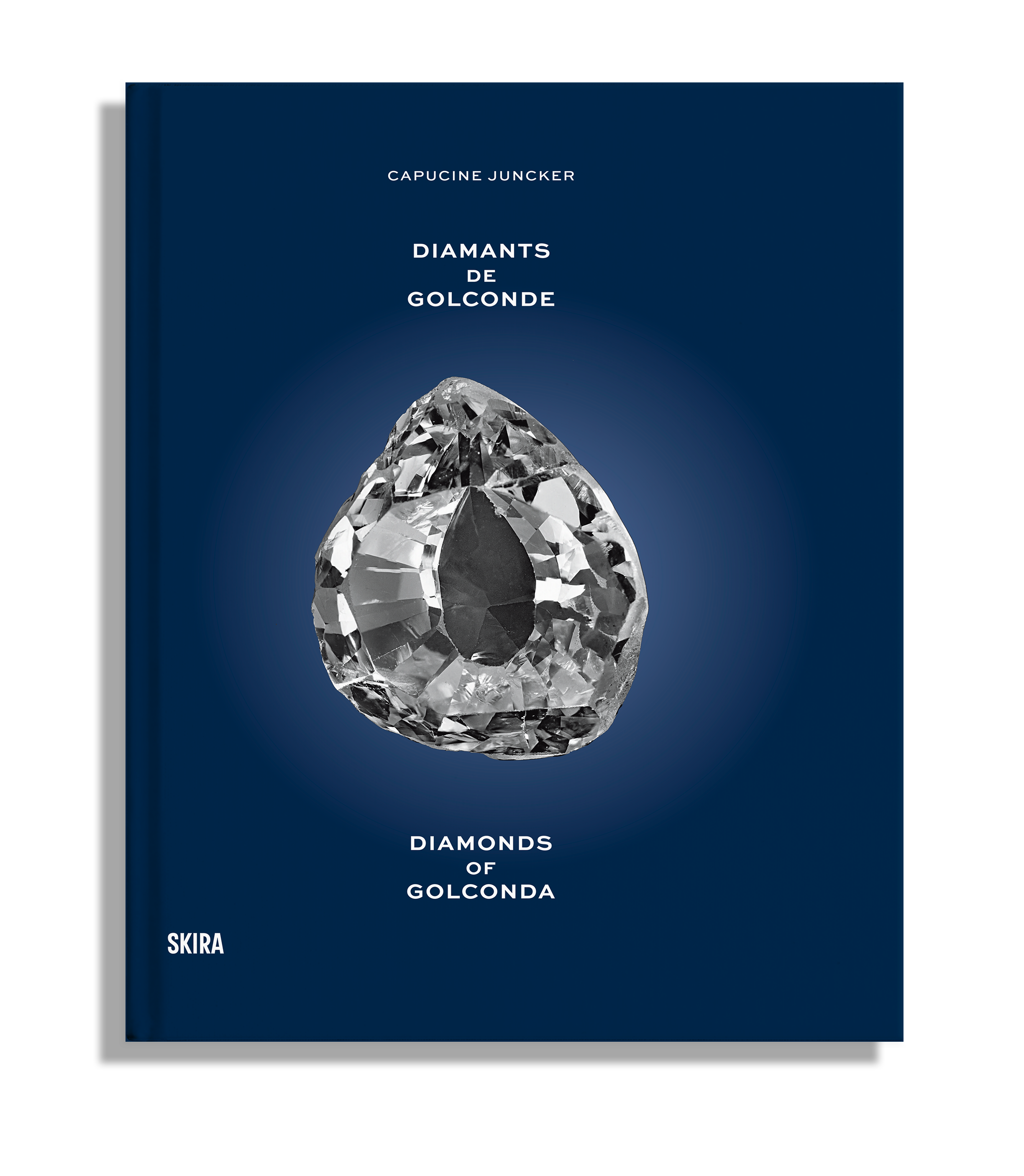
Juncker’s latest book, Diamonds from Golconda (Skira, 2024), is devoted to India’s legendary Golconda diamonds, considered by many to be the most desirable diamonds in the world. Hers is the first book focused exclusively on the subject. “According to available sources, it is reasonable to assume that diamond mining took place [in India] at least as early as the fourth century BC, and may even be rooted in an older mining tradition, Juncker says. The earliest reference text on the subject is found in the Arthashastra, a Sanskrit treatise written between the third century BC and the third century AD, which describes an organised system for the production, control and trade of diamonds and gems under state control. This organisation appears to be an extension of even older practices, as suggested by the Ratnapariksa, the founding text of the Indian lapidary tradition.” The first century AD Roman author Pliny the Elder explicitly mentions Indian diamonds in his book Natural history, Juncker notes. “This confirms not only the antiquity of their exploitation, but also their circulation in an active international trade network between India and the Roman world.” But Juncker’s interest in Golconda diamonds is not only relegated to facts and dates. It is a passion ignited by the cultural, spiritual and mythical power these stones have wielded over human history. Part of that power comes from the fact that Golconda diamonds are some of the purest diamonds ever mined.
“Who says Golconda, says perfection of the material,” says historian and journalist Gabrielle de Montmorin, who is moderating a talk on Golconda diamonds with Juncker at the 2025 edition of GemGenève. “The fascination exerted by the so-called Golconda diamonds is an alchemy mixing history and gemmology, with this chemical Type IIa. That is to say, the purest carbon material. You add the fact that the mine is exhausted and you have all the elements of a success story.” Type IIa refers to the rating scale that indicates a diamond’s chemical quality. Much of that quality is related to nitrogen, says gem and jewellery journalist Richa Goyal Sikri. “Nitrogen is the element that is responsible for the yellow tinge in a diamond, Sikri says. Diamonds from the Golconda region are famed because many contain no measurable traces of nitrogen.”
Around 98% of natural diamonds contain significant amounts of nitrogen and are classified as Type Ia. “Type I does not in any way prevent a diamond from being colourless and internally flawless, Juncker notes. Visual and optical grading criteria used in gemological assessment are evaluated independently of the diamond’s chemical type. ”Type IIa diamonds, which are prized for their chemical purity, represent less than 2% of global production. Type IIb diamonds, which account for less than 0.1% of diamonds mined but include such famed stones as the Hope diamond, the Wittelsbach, the Farnese blue and the Idol’s eye, contain boron.“ That gives them a characteristic blue-greyish tint, says Juncker. Although even rarer than Iia diamonds, they are not purer, since boron is also an impurity.”
“Most of the ancient diamonds sourced from India were also high quality because they were alluvial,” says Sikri. Alluvial refers to something that was transported from its point of origin by moving waters. When a natural diamond deposit is disrupted by water erosion, the lower quality stones can break apart or be damaged during the process. Only the strongest survive the journey, which is why alluvial deposits tend to contain the best diamonds. The alluvial deposits from which the legendary Golconda diamonds were mined were exhausted by the early 19th century. That is one cause of their rarity today. Also adding to that rarity is the fact that proving a diamond’s provenance is difficult at best. “It is impossible to certify a Golconda diamond, Montmorin says. There are other sites for the extraction of Type IIa diamonds, starting with South Africa. A stone quarried there could very well have travelled to India to be cut, so the association that IIa equals Golconda is unfounded. Moreover, a laboratory like The Swiss Gemmological Institute (SSEF) refuses to certify such an origin because it is simply scientifically and geologically impossible.”
Juncker agrees. “It is scientifically impossible to determine where a diamond was mined,” she says. Anyway, she notes that the term Golconda does not even refer to a single mine. “It refers to a historic region and a series of mines, most of which were located along the Krishna River, she says. What is more, not all the diamonds mined there were of exceptional quality. They also produced Type I diamonds. The ‘Golconda’ label is often idealised. ‘Golconda’ refers to an area (the Deccan), a history, a date (before 1725 — when Brazilian mines began producing stones of similar quality) and a specific Indo-Islamic culture, not a universal quality. In reality, the true definition of a Golconda diamond is based on a long history of mining, documented traceability and sometimes exceptional gemmological qualities.”
If diamonds of similar quality have been mined elsewhere for centuries, and provenance is debatable, how have Golconda diamonds maintained their unique value? One reason is the mysterious, intangible quality they are said to possess, which some believe is perceptible more by feeling than by scientific analyses. Olivier Baroin is the owner of La Golconde, an antique jewellery shoppe in Paris that also manages the archives of legendary jewellery designer Suzanne Belperron. Baroin recalls a recent commission he received from a major auction house to appraise some jewellery. “While consulting the archives of the original client, I came across a note dated 17 August 1938, Baroin says. “This revealed that the client had been presented with two rings — one featuring a 7.80-carat Golconda diamond priced at 200,000 francs, and the other with an 8.28-carat Brazilian stone, offered at 100,000 francs. The emphasis was not on factors such as colour or clarity, but rather on a unique crystalline quality referred to as ‘la matière’. This purchase, and the emphasis placed on its provenance, underscores the notion that this exceptional quality, this ‘matière’, was already held in high regard.” But what is ‘la matière’ of a Golconda diamond? Is it a substance? Is it a form? Is it a quality?
“They are mythical diamonds!” says Juncker. Ancient Sanskrit lapidary treatises attributed “highly codified symbolic, astrological and spiritual properties” to diamonds, she points out. “Certain crystalline shapes, colours or sexual ‘natures’ (female, neutral) could be considered inappropriate or even harmful, depending on the caste, sex or situation of the wearer. Certain diamonds were strongly discouraged for pregnant women, as their energy was said to be disruptive.”
Some Golconda diamonds have even been associated with curses. “The most emblematic of these is undoubtedly the Koh-i-Noor, Juncker says. This legendary diamond, whose name translates to “Mountain of light”, has passed through the hands of many dynasties — Mughal, Persian, Afghan, Sikh and then British — in a history of conquest, plunder and murder.” There is a belief that only female rulers could wear the Koh-i-Noor and any male who wore it would die.“We know from the remarkable book on the subject by William Dalrymple and Anita Anand that this legend was born in 1849, at the time of the British annexation of the Punjab, when the diamond was taken from the hands of the last Sikh ruler, the young Duleep Singh, to be given to Queen Victoria, Juncker says. Since then, it has only been worn by England’s queens, a practice that continues to this day, most notably in the Queen Mother’s crown.”
Other Golconda diamonds have been linked to upheavals of history. “One of the most famous thefts in French history, that of the Crown diamonds of France, took place in 1792 during the turmoil of the French Revolution, Juncker says. Stolen over several successive nights from the Garde-Meuble de la Couronne, some of the diamonds were recovered, others disappeared irretrievably and still others were ‘masked’ by remnants such as the Hope.” The so-called Hope diamond — a 45.52 carat, blue-violet diamond currently in the collection of the Smithsonian — is believed to have been cut from one of the stones Juncker mentioned were stolen during the French Revolution. The original, larger diamond is said to have left India in 1666 in uncut form with French gem merchant Jean-Baptiste Tavernier. Tavernier gave it the name Le bleu de France and sold it to King Louis XIV two years later. Through succession, it became the possession of King Louis XVI and his wife Marie Antoinette, who were executed by guillotine shortly after Le bleu de France was stolen in the revolution. Sometime later, Le bleu de France was re-cut, which darkened the stone, and was then purchased by members of the Hope banking family, who gave it its current name.
In 1911, Evalyn Walsh McLean, an American heiress and socialite, acquired the Hope diamond, an event that Juncker says is in part responsible for the place Golconda diamonds hold in Hollywood lore and contemporary pop culture. “Pierre Cartier orchestrated its sale with an almost cinematic mise-en-scène: royal heritage, ancient spell, family tragedy, Juncker says. The Hope became Walsh McLean’s favourite piece of jewellery, which she wore on social occasions and even made her dog, Mike, a Great Dane, wear it! This kind of story helped to fuel a collective imagination that Hollywood gradually seized upon. Films featuring ‘cursed’ diamonds, inspired by the story of the Hope or similar legends were made. Examples include The Hope diamond mystery (1921), inspired directly by the Hope, and The Moonstone, adapted several times for the cinema, based on the earlier novel by Wilkie Collins.”
Ultimately, it may not matter whether the curses associated with some Golconda diamonds are real, or even whether a particular diamond can definitively be traced to the original mines. The origins of diamonds have always been enmeshed in unprovable layers of mystery and myth. That is part of their allure. Juncker quotes her favourite legend about the origins of diamonds in the first chapter of her book. “It is a story from the Sanskrit tradition about an asura — a kind of titan or demigod — who was captured by the gods of the Hindu pantheon and forced to sacrifice himself, she says. Struck by Indra’s thunderbolt (vajra), his limbs are said to have been transformed into ‘a seed of jewels.’ Since then, ‘various diamonds have been found in the places on Earth where some fragments of the bones of the Lightning Bearer’s rival happened to fall.’” It is the beauty and ambiguity of stories like this that give these precious stones their strange appeal. Connoisseurs are left to their own sensibilities to determine whether their diamonds have “la matière”, or “the stuff”, to be called Golconda.
3 questions to… Capucine Juncker by Phillip Barcio

What inspired you to write your book Diamonds from Golconda?
This book was born of the convergence of several passions: my background in gemmology, my interest in cultural exchanges between India and Europe, and my fascination with the very name Golconda — a word charged with prestige, but often dissociated from its historical and geographical reality. The aim was to tell the real story of these diamonds: their Indian roots, and their journey from the alluvial mines of the Deccan to the various empires that fought over them. I wanted to combine geography, history, myths, culture and gemmology, to offer an account that was both rigorous and sensitive.
Have diamonds always been used as adornment?
While it is true that diamonds have been used as ornaments since ancient times, especially in the ancient statuary of Hindu temples depicting goddesses dripping with jewels, it seems to me that their primary function was of a different order: spiritual, talismanic and political. In ancient India, the diamond was seen as a stone of power: it protected, associated with the divine and consolidated sovereignty. Hindu lapidary treatises such as the Ratnapariksa or the Brhatsamhita, written for jewellers, merchants and princes, show that diamonds were valued according to both physical and symbolic criteria: their crystalline form (for example, octahedral), their colour (associated with a deity or a caste), their optical purity and their “sexual nature” (male, female or neutral) determined their beneficial or harmful virtues. It was also associated with the planet Venus (Sukra), reinforcing its astrological value. In this tradition, a good diamond would protect the ruler, ward off evil forces and promote balance in the kingdom.
Do the utilitarian qualities of diamonds also have ancient roots?
Yes, in addition to their symbolic function, diamonds had an economic and strategic dimension. As early as the Arthashastra, diamonds are mentioned as a precious commodity with high added value, used to build royal treasuries, forge alliances and assert the power of the state. Hindu jewellers used the exceptional hardness of diamonds to cut or engrave other precious stones. It was probably only later that their aesthetic value came to the fore, particularly in royal jewellery. This use was first established at the Bahmanid and Deccan courts, before reaching its apogee under the Mughals, then the Safavid, Ottoman and finally European jewellery traditions, where the diamond became the stone par excellence of royal prestige.

AMA Art Media Agency #370
Mountains of light by Phillip Barcio
Veuillez cliquer sur ce lien pour découvrir l’intégralité de la revue AMA #370 :
ama-370-hd-en
The Taveez set in a necklace, 17th century, diamonds and silk cord, SANTI 1.36 × 1.18 × 0.84 cm (dimensions of the central diamond)